
Seeing what lies beneath the surface
Safe, digital X-rays for precise diagnosis and proactive dental care
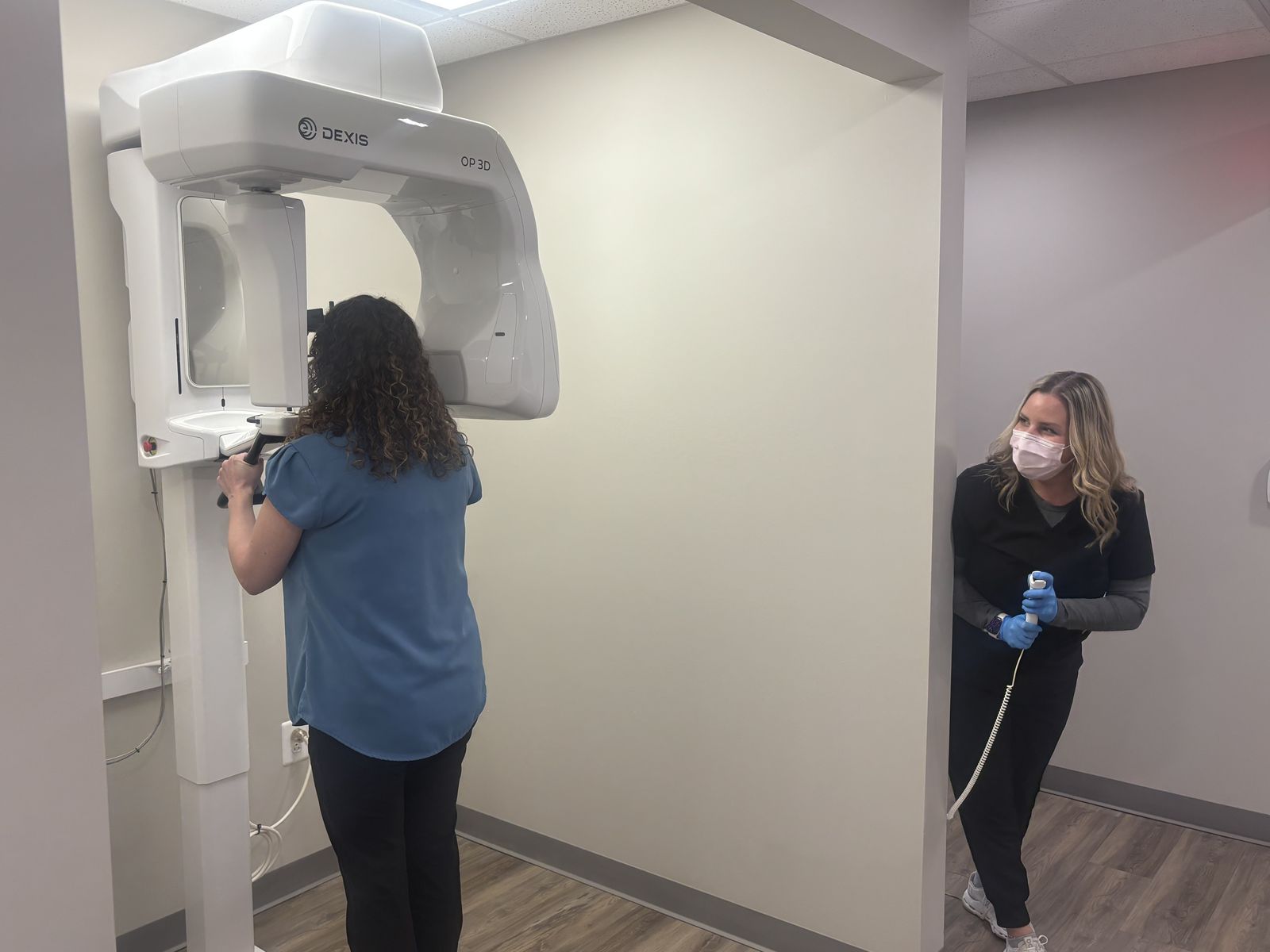
What are dental X-rays?
While a visual exam tells us a lot, X-rays are a clinical superpower. They allow us to see through enamel and into your teeth’s roots and your jawbone, areas the naked eye can’t reach. By catching tiny issues like microscopic decay or early bone loss now, we can prevent them from turning into major, painful, and expensive emergencies later.
Key benefits:
- Detects cavities hidden between teeth.
- Monitors the health of your jawbone and tooth roots.
- Identifies abscesses, cysts, or tumors early.
- Tracks the progress of developing teeth in children.
Common types of X-rays we use
- Bitewing X-rays: Our bread and butter and most common type of images show the crowns of your upper and lower teeth to help us find decay between them.
- Periapical X-rays: When we need the full picture of a specific tooth, this view shows everything from the crown to the end of the root where it anchors in the jaw
- Panoramic X-rays: These wrap-around images capture your entire mouth in one go. We use it for planning extractions, implants, or braces.
- CBCT (3D Imaging): For complex surgeries and implant placement, this imaging provides a high-definition, 3D view of your oral anatomy. It’s like a GPS for your mouth.
Step-by-step process
We’ve refined our process to be quick, comfortable, and totally transparent.
- Preparation: We get you settled comfortably in the chair. Current American Dental Association guidance no longer recommends a lead apron for digital X-rays, but we keep one on hand and will use it if you prefer.
- Positioning: Next, we put a small, cushioned digital sensor inside your mouth. We’ll guide you to bite down gently to keep it in place.
- Capture: You’ll hold still for a split second; that’s all the time the machine needs to work its magic.
- Instant Review: No waiting for a darkroom! The image pops up immediately on our chairside computer screen.
- Analysis: We zoom in and adjust contrast to spot the earliest (and microscopic) signs of trouble.
- Patient Education: We’ll turn the screen toward you and walk you through the results so you see what we see.
Digital X-rays vs. Traditional Film
| Feature | Digital X-rays | Traditional Film |
|---|---|---|
| Radiation Exposure | Up to 80-90% less radiation | Standard radiation levels |
| Processing Time | Instant results on screen | Requires chemicals and 5-10 mins |
| Image Quality | High-res; can be zoomed/enhanced | Fixed size and contrast |
| Environmental Impact | Eco-friendly; no chemicals/lead | Requires chemical disposal |
| Transferability | Emailed instantly to specialists | Must be physically mailed/picked up |
Safety & Frequency
Some people worry about potential radiation exposure from X-rays. But here’s the reality: X-rays are incredibly low-dose. A standard set of digital bitewing X-rays exposes you to about the same radiation as eating about 50 bananas or taking a cross-country flight.
- Frequency: Most healthy adults only need “screening” X-rays once every 12 to 18 months. We only take them when necessary.
- Pregnancy: Dental X-rays are considered safe during pregnancy, but please let us know if you’re expecting so we can take extra precautions and limit imaging to what is necessary.
- History: Did you have X-rays taken recently at another office? We can usually have them transferred to save you time and money.
Frequently asked questions
Are dental X-rays safe?
Absolutely. Thanks to digital technology and high-speed sensors, the amount of radiation you’re exposed to is negligible. We follow the ALARA principle (As Low As Reasonably Achievable) to keep you safe.
How often do I really need X-rays?
It depends on your oral health history. If you’re prone to cavities or gum disease, we may check more often. For most, a yearly or bi-yearly check is plenty.
Why don’t you put a heavy apron on me anymore?
The American Dental Association no longer recommends lead aprons or thyroid collars for dental X-rays. Today’s digital sensors use such a low dose, and the beam is so tightly focused, that the apron no longer adds meaningful protection. If you’d feel more comfortable wearing one, just ask. We keep aprons in the office for anyone who requests one.
Can you see cavities without an X-ray?
Sometimes, but usually only after they’ve gotten large enough to damage a tooth’s structure. X-rays allow us to stop them while they’re still tiny and easy to fix.
Get a clear picture of your oral health.
Call us at (610) 449-2001 (Drexel Hill Dental, Broomall) or (610) 345-0700 (Jennersville Family Dentistry, West Grove), or send a request and our front desk will follow up within one business day.