
Save your natural tooth and stop the pain
Gentle, modern root canal therapy to eliminate infection and preserve your smile
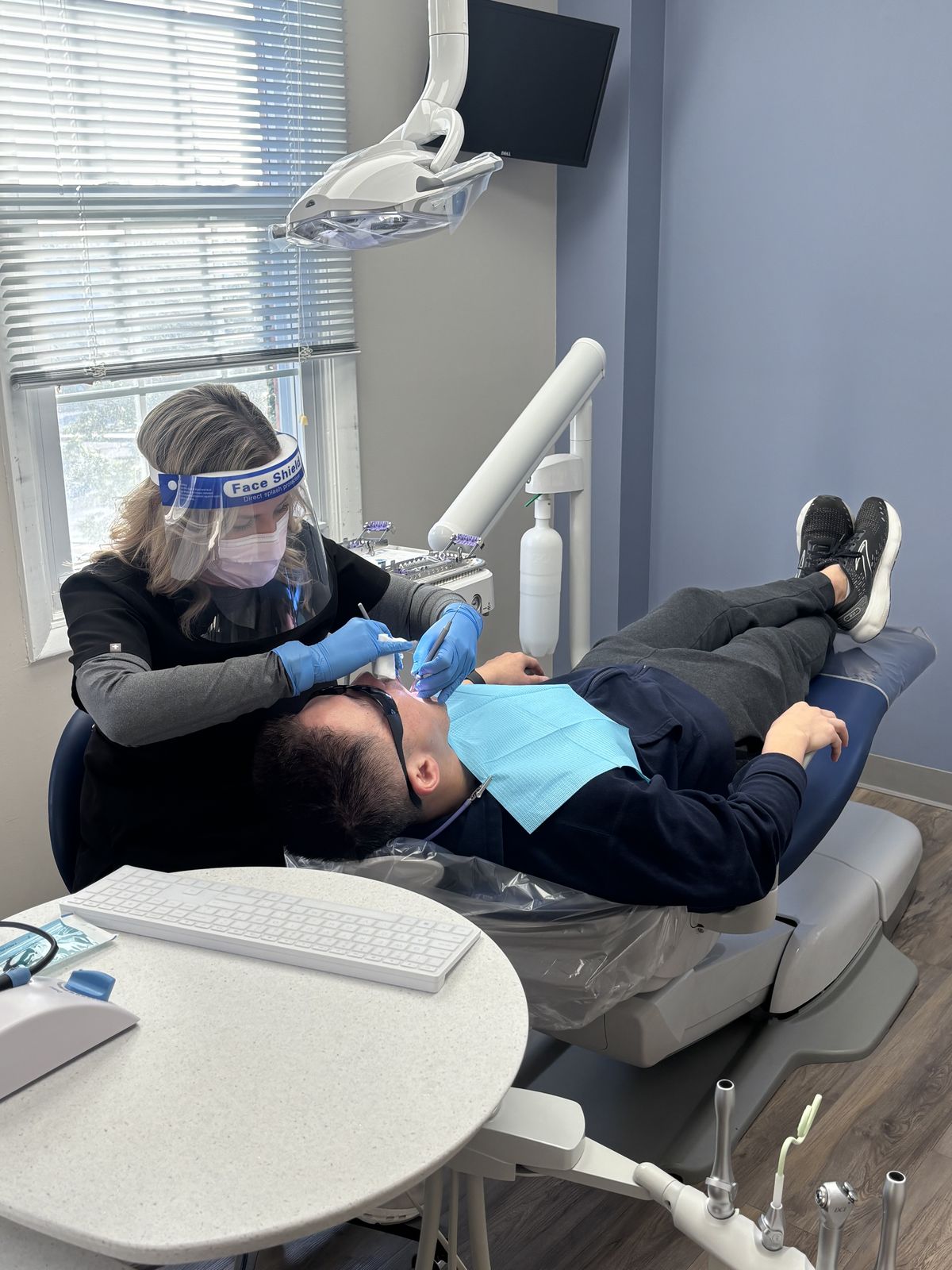
What is root canal therapy?
Despite the myths, a root canal doesn’t cause pain, it relieves it. Inside each tooth is a soft tissue called pulp that contains nerves and blood vessels. When injury or decay infects the pulp, it becomes incredibly painful. Root canal therapy allows us to access the tooth, remove the diseased tissue, and thoroughly disinfect the area. This process saves the tooth that would otherwise need to be pulled.
Key benefits:
- Immediate relief from toothache and pressure.
- Prevents the spread of infection to the jawbone or surrounding teeth.
- Keeps your natural tooth in place (no need for an implant).
- Restores normal biting force and sensation.
Signs you might need a root canal
Your body sends signals if a tooth is in trouble. Give us a call if you’re experiencing any of these symptoms:
- Persistent pain: Deep aching or throbbing that keeps you up at night or doesn’t go away with OTC painkillers.
- Temperature sensitivity: Sharp, lingering pain when you eat or drink hot or cold items.
- Swollen gums: Tenderness or a pimple-like bump (abscess) on your gums near the tooth.
- Tooth discoloration: A tooth that has started to look dark, grey, or bruised compared to its neighbors.
- Pain when chewing: Sharp pain or extreme tenderness whenever you try to chew or even touch your tooth.
Step-by-step process
We prioritize your comfort at every stage. For most patients, the experience is no more stressful than getting a routine filling.
- Imaging: We start with X-rays to map out the shape of your root canals and find the extent of infection.
- Local anesthesia: We numb the area completely. You’ll feel a slight pinch, and then nothing but a bit of pressure for the rest of the visit.
- Pulpectomy: We create a tiny opening in the tooth’s crown to access and remove the diseased pulp and nerves.
- Disinfection: Using specialized tools, we thoroughly clean, shape, and disinfect the canals to remove all traces of bacteria.
- Sealing: Next, we fill the empty canals with a rubber-like material called gutta-percha, a biocompatible, rubber-like material that seals the tooth from the inside out.
- Restoration: We place a temporary filling to protect the tooth. In a follow-up visit, we’ll usually place a permanent crown to restore the tooth’s full strength.
Root Canal vs. Tooth Extraction
Whenever possible, we want to save your natural tooth. Here’s how the two options compare:
| Feature | Root Canal Therapy | Tooth Extraction |
|---|---|---|
| Natural Tooth | You keep your natural tooth | The tooth is permanently removed |
| Recovery | Quick; usually back to normal in 1-2 days | Longer; requires site healing/clotting |
| Follow-up | Usually requires a protective crown | Requires an implant or bridge to fill the gap |
| Long-term cost | Higher upfront, but prevents future shifting | Lower upfront, but bridge/implant costs more |
Aftercare & Longevity
A root-canaled tooth can last a lifetime with the right care. Here’s what to remember:
- Easy does it: Avoid chewing on the treated tooth until the permanent crown is placed.
- Manage soreness: It’s normal to feel some bruising in your jaw for a day or two. Over-the-counter anti-inflammatories usually do the trick.
- Monitor your gums: If you had an abscess on your gums, it should disappear within a few days.
- Hygiene is key: While the inside of your tooth is sealed, the outside can still get a cavity. Keep up with your brushing and flossing.
Frequently asked questions
Does a root canal hurt?
This worry is one of the biggest dental myths. Modern anesthesia and technology ensure the procedure is virtually painless. Most patients describe it as similar to getting a cavity filled.
How long does the procedure take?
Most root canal treatments take one 60- to 90-minute visit. Complex cases might need a second visit to confirm we’ve disinfected everything completely.
Why do I need a crown after a root canal?
Removing a tooth’s pulp removes its blood supply, so it can become brittle over time. A crown acts as a helmet, protecting the tooth from fracturing under the pressure of chewing.
What happens if I don’t get a root canal?
The infection won’t go away on its own. Eventually, you could end up with a painful abscess, bone loss in your jaw, and the loss of the tooth entirely.
Don’t ignore the ache. Save your tooth today.
Call us at (610) 449-2001 (Drexel Hill Dental, Broomall) or (610) 345-0700 (Jennersville Family Dentistry, West Grove), or send a request and our front desk will follow up within one business day.