
Seal out decay before it starts
An invisible, protective barrier for the hard-to-reach grooves of your back teeth
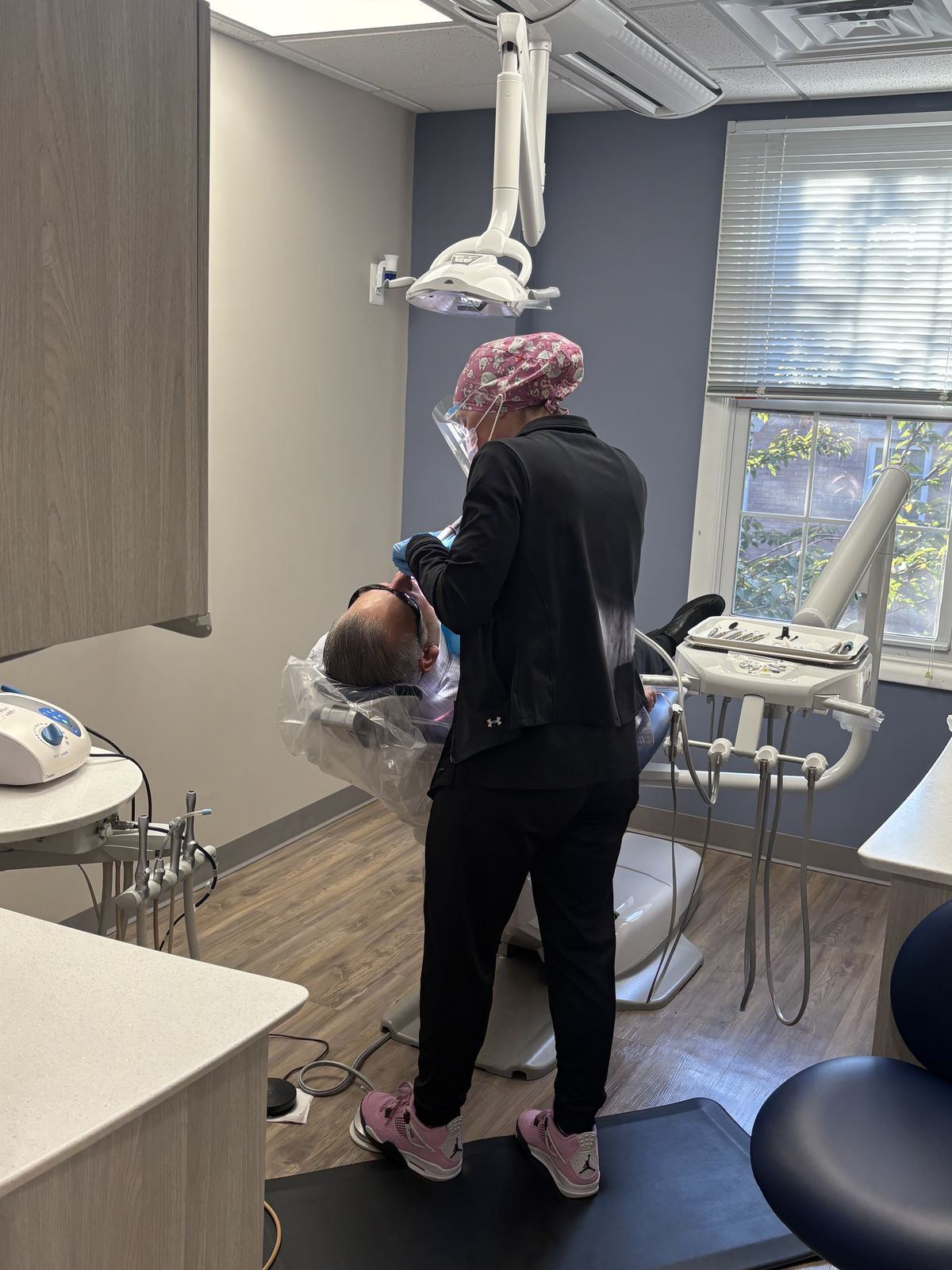
What are dental sealants?
Your back teeth (molars) are like mountain ranges with deep, narrow valleys. These grooves, called pits and fissures, become the perfect hiding spots for cavity-causing bacteria. In fact, many of these grooves are too narrow for even a single toothbrush bristle to reach.
Dental sealants are a secret weapon against decay. We can paint these thin, protective coatings onto your teeth’s chewing surfaces. Filling in the crevices creates a smooth, easy-to-clean shield that keeps food particles and plaque out.
Key benefits:
- Reduce the risk of decay in molars by nearly 80%.
- 100% painless and non-invasive (no drilling or numbing!).
- Lasts for years with normal wear and tear.
- Help prevent the need for more expensive fillings or crowns in the future.
Who should get sealants?
While often associated with pediatric dentistry, sealants aren’t just for kids. They’re a fantastic preventative tool for:
- Children: We recommend sealants as soon as their permanent molars erupt (typically around ages 6 and 12).
- Teenagers: During these cavity-prone years, when snacking is high, and hygiene might be… a bit rushed… sealants provide an extra safety net.
- Adults: If you have molars without decay or existing fillings, sealants can provide lifelong protection.
- High-risk patients: If your tooth anatomy includes naturally deep pits, you may be more susceptible to cavities, even if you brush well.
Step-by-step process
The entire treatment takes just a few minutes per tooth. Here’s how we build your protective shield.
- Cleaning: We thoroughly scrub the tooth surface to remove any trapped debris.
- Preparation: We apply a mild “etching” solution to slightly roughen the enamel on a microscopic level to help the sealant form a strong bond.
- Rinsing & drying: We wash away the solution and completely dry the tooth.
- Application: We paint the liquid resin onto the chewing surface, allowing it to flow into the deep grooves.
- Curing: We use a special blue light to harden the resin into a durable plastic shield.
- Evaluation: Finally, we check your bite to make sure the sealant feels smooth and comfortable.
Sealants vs. Fillings
It’s always better to prevent a hole than to plug one. Here’s the difference between these two common treatments.
| Feature | Dental Sealants | Dental Fillings |
|---|---|---|
| Purpose | Prevention (stops a cavity from starting) | Restoration (repairs a cavity that exists) |
| Invasiveness | No drilling or numbing required | Requires removal of decayed tooth structure |
| Placement | Applied to healthy, "at-risk" teeth | Applied to damaged or decayed teeth |
| Appearance | Clear or tooth-colored; virtually invisible | Tooth-colored composite or silver amalgam |
| Goal | To save time, money, and tooth structure | To stop infection and restore function |
Aftercare & Longevity
Sealants are low-maintenance, but not invincible. To maintain their lifespan:
- Check the seal: We’ll check for chips or wear during every 6-month exam. If a sealant wears down, it’s easy to give it a quick touch-up.
- Normal eating: You can eat and drink immediately after the appointment.
- Sticky foods: While sealant is strong, avoid chewing excessively on ice or hard sticky candies that could pull it off.
- Longevity: Sealants typically last a decade or more before needing a “touch-up.”
Frequently asked questions
Do sealants feel weird in the mouth?
At first, you might notice a slight difference in how your teeth touch, but the feeling usually disappears within a few hours of normal talking and eating as the sealant settles.
Can you see them when I smile?
Nope! Sealants are either clear or tooth-colored. Because they’re applied to the chewing surface of your back teeth, they’re virtually invisible to everyone else.
What happens if a sealant falls off?
Don’t worry, it’s not an emergency. However, the tooth has lost its protection, so let us know at your next visit (or sooner, if you’re cavity-prone) so we can reapply it.
Are sealants only for kids?
Not at all! While we prioritize them for children’s new permanent teeth, adults with deep grooves and no fillings also benefit from the added protection.
A simple step today for a cavity-free tomorrow.
Call us at (610) 449-2001 (Drexel Hill Dental, Broomall) or (610) 345-0700 (Jennersville Family Dentistry, West Grove), or send a request and our front desk will follow up within one business day.