
Restore your smile and confidence with custom dentures
Comfortable, natural-looking, and functional solutions for replacing missing teeth
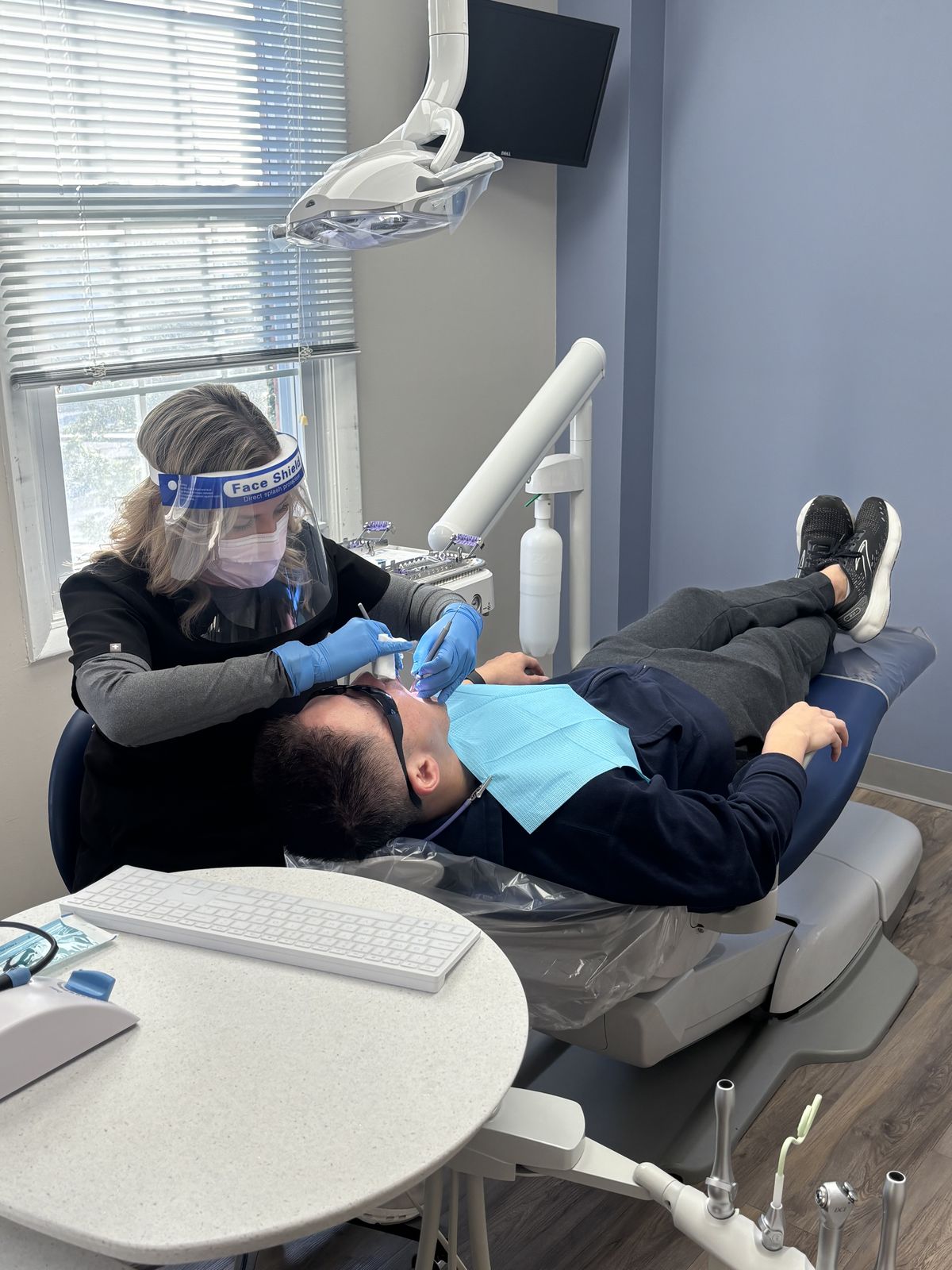
What are dentures?
Dentures are removable denture appliances designed to replace missing teeth and surrounding tissue. If you’re imagining the false teeth of the past, you’re in for a surprise. We don’t make teeth from wood or ivory, like George Washington. Modern dentistry allows us to craft comfortable, realistic dentures to help you eat, speak, and smile easily.
Key benefits:
- Restores a youthful facial appearance by supporting lips and cheeks.
- Improves chewing ability and helps you speak clearly.
- A more cost-effective solution for replacing multiple teeth at once.
- A non-surgical and relatively quick process.
Types of dentures
Every mouth is different, so we offer several types of dentures to fit your specific needs (and mouth).
- Full dentures: This option replaces an entire arch of teeth (top, bottom, or both) when no natural teeth remain.
- Partial dentures: These dentures replace several missing teeth while using your remaining natural teeth as anchors.
- Implant-supported dentures: If you want maximum stability, you can opt for snap-on dentures that attach to dental implants.
- Immediate dentures: We can often “install” these temporary dentures the same day we remove your teeth while we wait for the lab to manufacture your permanent set.
Step-by-step process
Creating a custom set of dentures is an art form. We take our time, and a lot of measurements, to make sure we get the best, most comfortable fit for your mouth.
- Initial consultation: We evaluate your oral health and discuss your aesthetic goals and how you want your new smile to look.
- Impressions: We take molds of your ridges and gums to ensure the new teeth are as accurate (and comfortable) as possible.
- Bite registration: We measure how your jaws relate to each other so your new dentures give you a comfortable, natural bite.
- Wax try-in: You get a sneak preview during this step, when you try on a wax mockup of your dentures to check the look, fit, and tooth shade.
- Final delivery: Once your appliance is finished, we make final adjustments to get a perfect fit.
- Follow-up: It’s normal to need a few minor tweaks as your mouth adjusts, we’re here to help eliminate any sore spots.
Dentures vs. Implants
Both are excellent options for tooth replacement, but they offer different experiences and price points.
| Feature | Traditional Dentures | Dental Implants |
|---|---|---|
| Stability | May slip or require adhesives | Permanently fixed; no movement |
| Bone Health | Bone naturally shrinks over time | Stimulates and preserves bone |
| Dietary Limits | Hard or sticky foods can be difficult | Eat anything (steak, apples, corn) |
| Longevity | Usually need replacement every 5-7 years | 25+ years to a lifetime |
| Maintenance | Must be removed and soaked nightly | Brush and floss like natural teeth |
Aftercare & Longevity
Your dentures are an investment in your quality of life. You can keep them, and your mouth, healthy by following these care steps.
- Clean your dentures daily with a soft-bristle brush and non-abrasive cleaner. Regular toothpaste is too gritty and can scratch the acrylic.
- Never let your dentures dry out. Soak them overnight in water or a mild solution to prevent warping.
- Even if you don’t have any teeth, keep brushing your gums, tongue, and palate to stimulate circulation and remove plaque.
- Your jaw’s shape changes naturally over time. Schedule annual visits to reline and adjust your dentures to keep them snug and comfortable.
Frequently asked questions
Will I be able to eat normally with dentures?
There’s a bit of a learning curve, but most patients return to their normal diet quickly. We recommend starting with softer foods and cutting items into smaller pieces as you get used to the appliance.
How do I keep my dentures from slipping?
A well-fitting denture should stay in place with natural suction. However, if you have significant bone loss, we can discuss denture adhesives or upgrading to implant-supported dentures for a more locked-in feel.
How long does it take to get used to new dentures?
It can take a few weeks for your tongue and cheek muscles to learn how to hold dentures in place. Your speech might sound different at first, but practicing reading aloud usually solves this issue quickly.
Can I sleep with my dentures in?
We generally recommend taking them out at night. Doing so gives your gum tissues a much-needed rest and prevents bacterial or fungal growth under the appliance.
Ready to smile again? Let’s find the perfect fit
Call us at (610) 449-2001 (Drexel Hill Dental, Broomall) or (610) 345-0700 (Jennersville Family Dentistry, West Grove), or send a request and our front desk will follow up within one business day.